manukahoney.pro/manuka-honey-pro-blog/
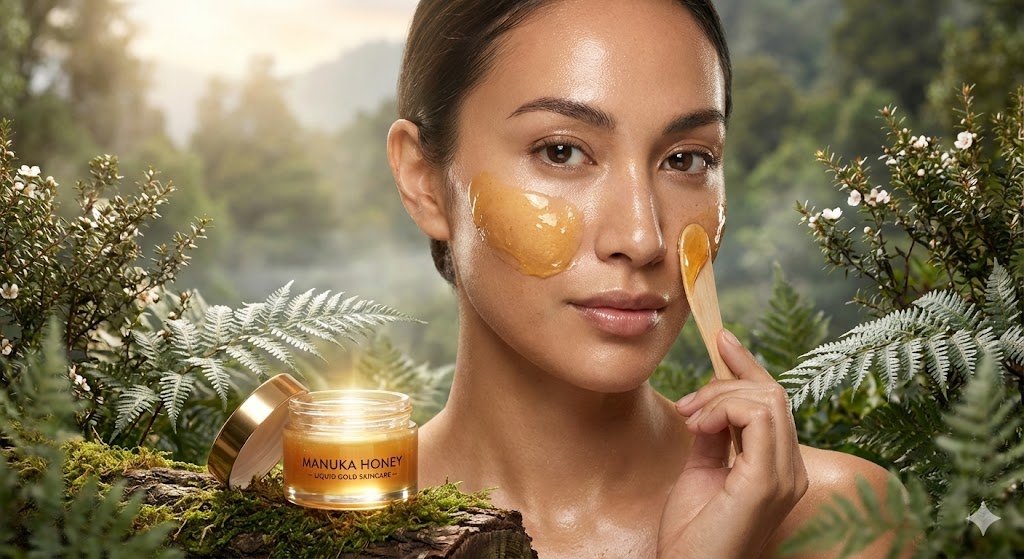
We spend hundreds of dollars on serums, toners, and chemical peels hoping to achieve that elusive “glass skin.” But what if the most powerful skincare ingredient isn’t found in a chemistry lab, but in the remote forests of New Zealand?
Manuka honey has transitioned from the pantry to the vanity cabinet, and for good reason. Celebrities like Kourtney Kardashian and Scarlett Johansson swear by it. But this isn’t just a Hollywood fad—it is a science-backed dermatological powerhouse.
If you struggle with hormonal acne, stubborn scars, or dull, dry skin, this “Liquid Gold” might just be the holy grail you’ve been looking for. Here is why Manuka honey belongs on your face, and exactly how to use it.
You might be tempted to grab that cute plastic bear of honey from the supermarket and smear it on your face. Please don’t.
Regular table honey is often pasteurized (which kills beneficial enzymes) and may contain added sugars that feed bacteria—the exact opposite of what acne-prone skin needs.
Manuka Honey is unique because of its concentration of Methylglyoxal (MGO).
It’s a Bacteria Assassin: MGO has been proven to inhibit Cutibacterium acnes, the bacteria responsible for those painful breakouts.
It’s a Natural Humectant: Unlike harsh acne treatments that strip your skin of oil (signaling your body to produce more oil), Manuka draws moisture from the air into your skin. This hydrates you without clogging pores.
Here is something most beauty bloggers miss. When Manuka honey comes into contact with skin fluids (or water), an enzyme called glucose oxidase activates. This enzyme slowly releases hydrogen peroxide at a very low, gentle level.
The result?
It acts as a mild antiseptic that cleanses wounds and pores continuously over time, without the burning or tissue damage caused by bottled hydrogen peroxide. It’s nature’s own time-release cleaning system!
This is where most people get it wrong. For skincare, potency matters, but texture matters too. You want a honey that is strong enough to fight inflammation but smooth enough to apply easily.
Avoid: UMF 5+ or non-certified honey (too weak).
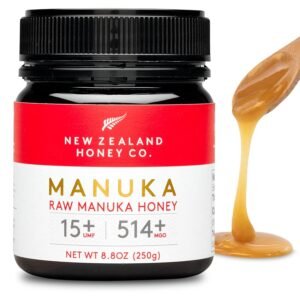
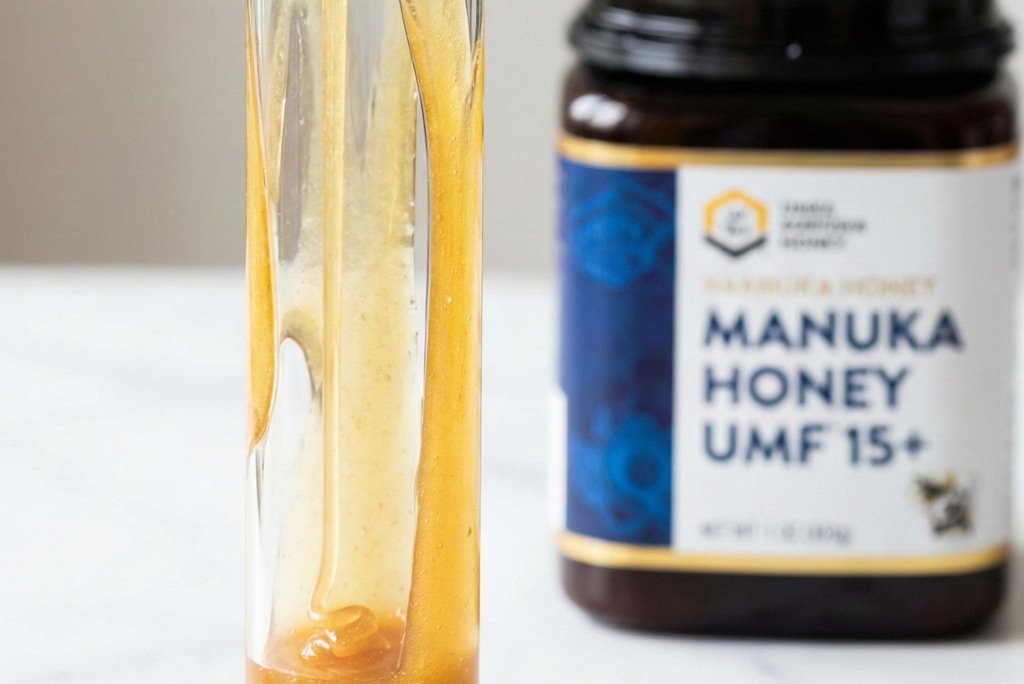
The Sweet Spot: UMF 15+ (MGO 514+). This offers high antibacterial activity to calm redness and fight acne, but isn’t as prohibitively expensive as the medical grades.
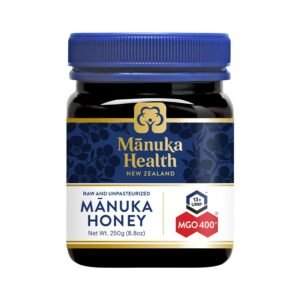
Brand Tip: We love Manuka Health or New Zealand Honey Co. for skincare because their “creaming” process results in a velvety texture that doesn’t drip as much as others.
Forget complicated 10-step routines. These masks are simple, effective, and entirely natural.
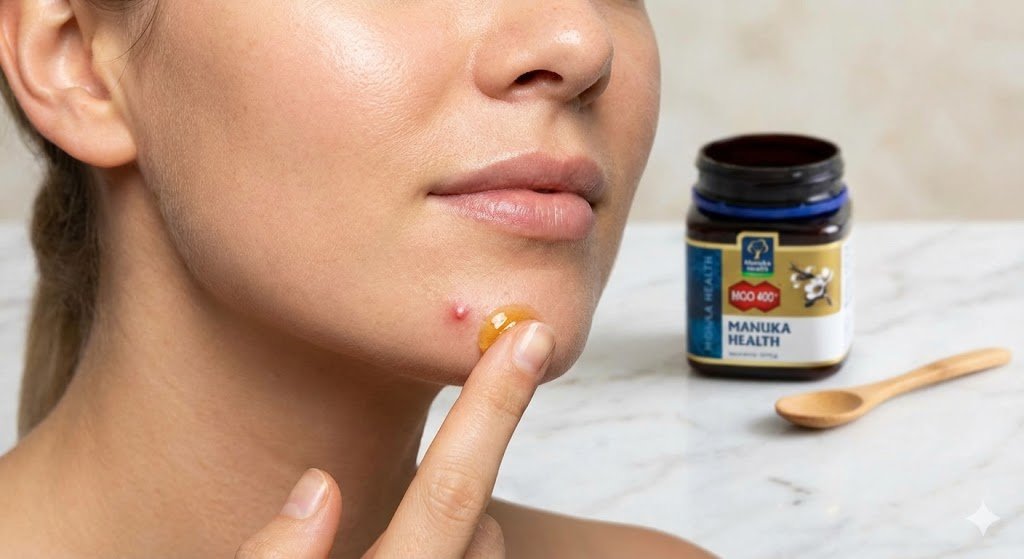
Best for: Active breakouts and whiteheads.
Ingredients: Pure Manuka Honey (UMF 15+).
How to: Dab a small amount directly onto the pimple. Cover with a small band-aid if doing this overnight.
Why it works: The concentrated MGO attacks the infection at the source while reducing the swelling overnight.
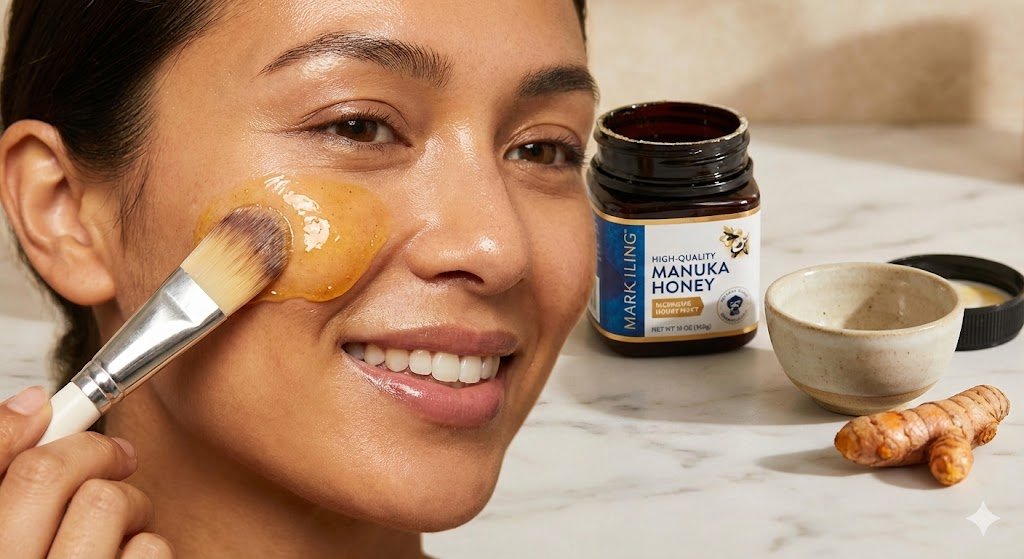
Best for: Fading acne scars and dark spots.
Ingredients: 1 tbsp Manuka Honey + 1/2 tsp Turmeric powder (or Cinnamon).
How to: Mix into a paste. Apply to the face for 20 minutes. Rinse thoroughly (Turmeric can stain, so use a dark towel!).
Why it works: Turmeric is a powerful anti-inflammatory that reduces hyperpigmentation, while Manuka repairs the tissue structure.
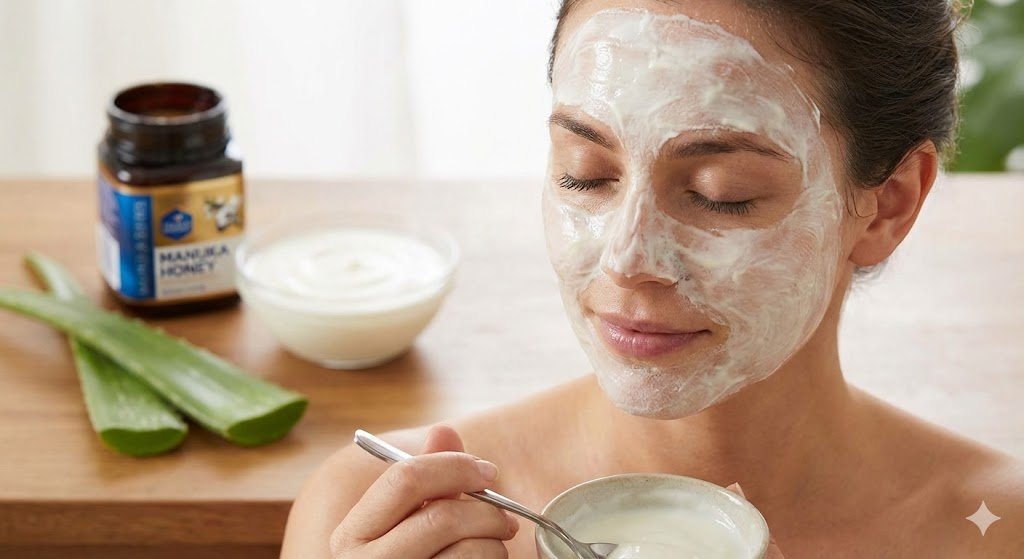
Best for: Dry, sensitive, or eczema-prone skin.
Ingredients: 1 tbsp Manuka Honey + 1 tbsp Organic Yogurt (or Aloe Vera).
How to: Mix and apply generously. Leave for 30 minutes.
Why it works: The probiotics in the yogurt work with the prebiotics in the honey to restore the skin’s microbiome barrier.

If you are ready to add Manuka to your beauty routine, these are the jars we recommend keeping on your bathroom shelf (not the kitchen!).
1. The Skincare Favorite: Manuka Health MGO 400+ Famous for its consistent quality and widespread availability. It has the perfect thickness for masks.
2. The Premium Choice: New Zealand Honey Co. UMF 15+ A raw, wild Manuka that is packed with living enzymes. The jar looks beautiful on a vanity, too.
Let’s be honest: honey is sticky. Follow these rules to keep it on your face and off your floor.
Warm Face, Warm Hands: Apply the honey after a warm shower when your pores are open.
Tie it Back: Use a headband. Getting Manuka out of your hairline is not fun.
The “Wet Finger” Technique: If the honey is too thick to spread, wet your fingertips slightly with warm water to help it glide over your skin.
Manuka honey isn’t a “quick fix” chemical peel; it’s a healing therapy. Consistent use (2-3 times a week) can transform the texture of your skin, reduce redness, and give you that natural glow that no highlighter can mimic.
It’s time to stop fighting your skin with harsh chemicals and start feeding it with nature’s most intelligent ingredient.
Not sure which brand is authentic? See our ranking of the Top 5 Best Manuka Honey Brands of 2026
If you are dealing with deeper cuts or surgical scars, check out our Medical Grade Guide to Wound Healing
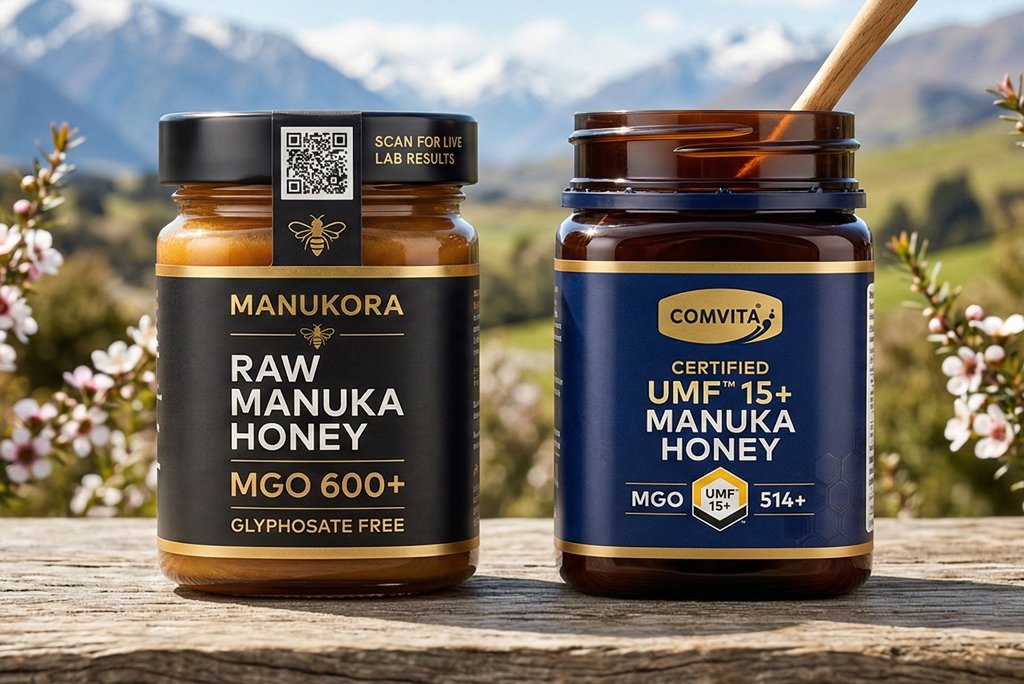
Torn between the UMF Gold Standard and modern traceability? Read our Manukora vs Comvita 2026 showdown to discover which premium honey wins on purity and taste.
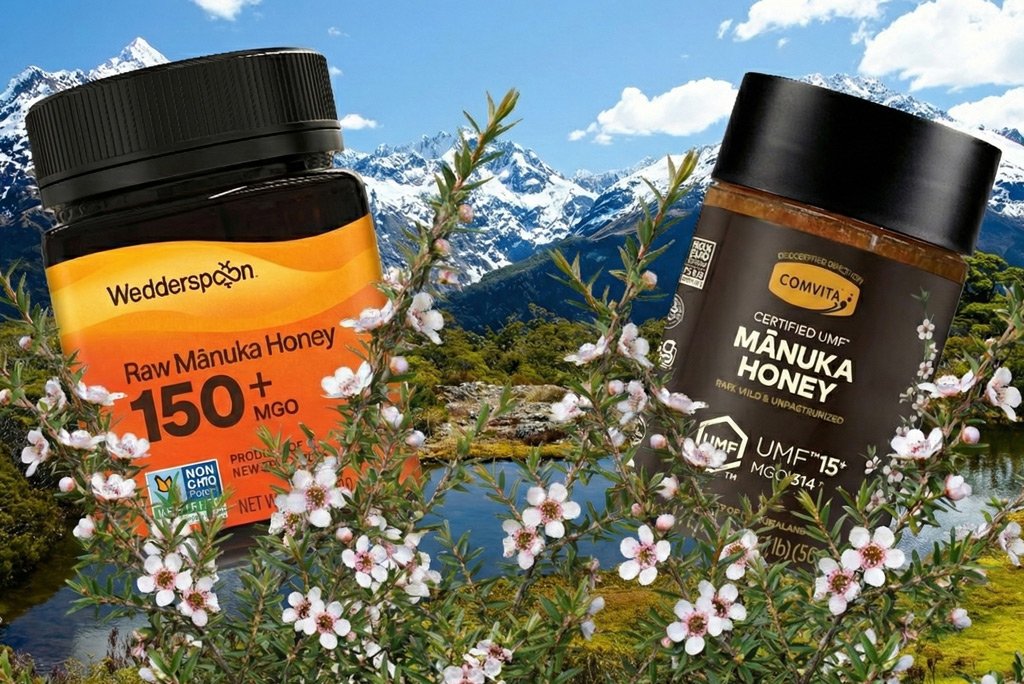
Stuck between Wedderspoon vs Comvita? Discover the shocking difference between UMF and KFactor certifications, and find out which Manuka honey is right for you.
Discover the latest Manuka honey market statistics for 2026. Get verified data on market size, global growth rates, and the shocking fake honey epidemic.
Manuka Honey Pro is a dedicated platform for health enthusiasts seeking the truth about the world’s most powerful superfood. Our mission is to simplify the science behind Manuka honey, guiding you through MGO ratings and UMF certifications with expert transparency.
Affiliate Disclosure: ManukaHoney.pro is a participant in the Amazon Services LLC Associates Program, an affiliate advertising program designed to provide a means for sites to earn advertising fees by advertising and linking to Amazon.com. As an Amazon Associate, we earn from qualifying purchases. This comes at no extra cost to you and helps support our research.