
Manuka honey isn’t just made; it is crafted by nature under extraordinary conditions. While regular honey can be produced almost anywhere, authentic Manuka honey requires a perfect “botanical storm” involving a specific plant, a precise climate, and a very short window of time.
In this guide, we’ll take you deep into the New Zealand wilderness to discover the high-tech and high-stakes process behind every jar of liquid gold.

How Manuka Honey is produced? The process begins with the Manuka Bush. This resilient, scrubby tree is native to the most remote, unpolluted regions of New Zealand.
The Flower: The Manuka tree produces delicate white and pink flowers. These blossoms contain the unique nectar that bees convert into bio-active honey.
The Secret Compound: The nectar contains a chemical called DHA (Dihydroxyacetone). Once the bees process it, DHA slowly transforms into MGO (Methylglyoxal), the compound responsible for the honey’s famous antibacterial strength.
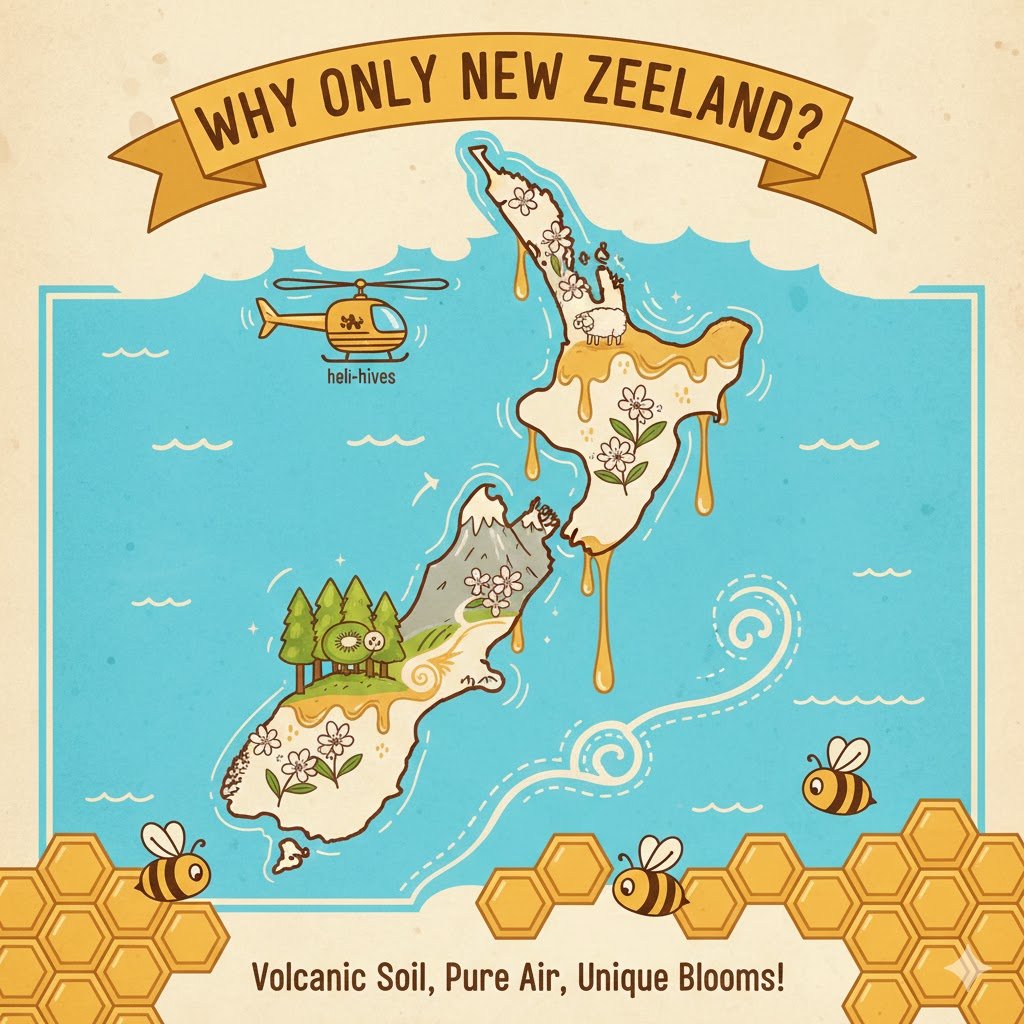
While a similar plant (Leptospermum polygalifolium) grows in Australia, New Zealand is the only place where the Leptospermum scoparium grows in vast, dense forests.
The combination of New Zealand’s volcanic soil, intense UV light, and clean air creates a unique “terroir” that boosts the plant’s production of secondary metabolites. This is why NZ Manuka is globally recognized as the gold standard for potency and purity.
This is the most critical factor in Manuka production. Unlike clover or wildflower honey, which bees can produce for months, the Manuka tree only blooms for 2 to 6 weeks a year.
The Timing: If it rains too much during these weeks, the bees won’t fly. If it’s too windy, the delicate petals fall off.
The Competition: Beekeepers must ensure their hives are placed in areas where only Manuka is blooming, otherwise, the bees will gather nectar from other plants, “diluting” the MGO concentration.
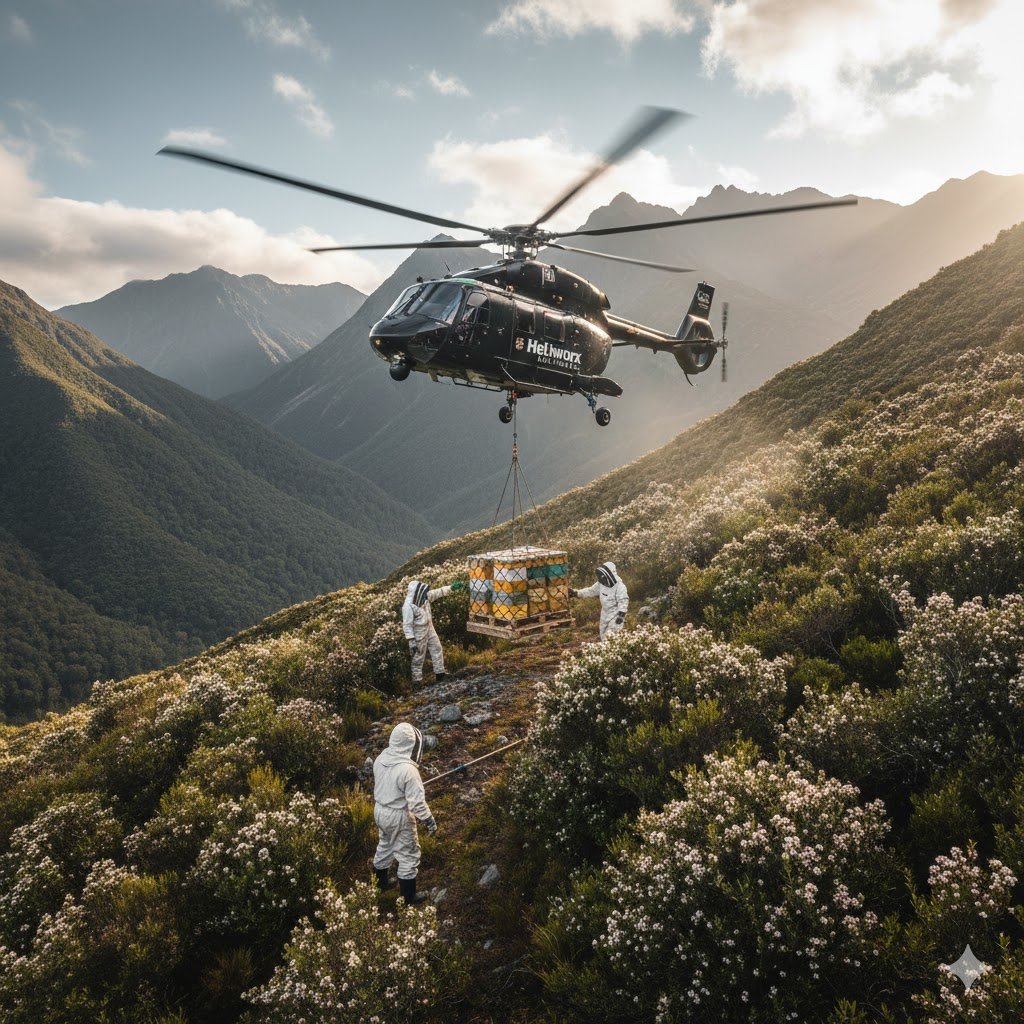
Because the best Manuka grows in the most inaccessible parts of the New Zealand bush, beekeepers often use helicopters to transport hives into the wilderness. This is one of the most fascinating aspects about how manuka honey is produced.
By placing hives in these “locked” locations, producers can guarantee Monofloral Manuka Honey—meaning the bees have focused almost exclusively on the Manuka flower.
Once the bees have done their job, the beekeepers harvest the honeycombs using cold-extraction methods to preserve the delicate enzymes.
Unlike other honeys that are best when fresh, Manuka honey is often stored in temperature-controlled rooms for 12 to 18 months. During this time, the DHA in the honey naturally converts into MGO. Producers wait until the potency peaks before bottling it.
Before a jar can be exported, it must pass a “Fingerprint” test by the New Zealand Ministry for Primary Industries (MPI). They check for:
Chemical Markers: To prove it is truly from the Manuka plant.
DNA Testing: To confirm the presence of Manuka pollen.
Did you know that Manuka honey is thixotropic? This means it is a gel in its resting state but becomes liquid when stirred or shaken. This unique texture is why it’s so thick and creamy, and why special “creaming” machines are used during bottling to give it that luxurious, smooth consistency.
When you see a jar of Manuka honey with a high rating, such as UMF 15+ or 20+, the price tag can be surprising. However, this is not just honey; it is a bioactive superfood produced in extremely limited quantities.
The rarity of high-potency Manuka is dictated by nature itself. While many Manuka bushes grow across New Zealand, only a small percentage of them—located in specific high-altitude or remote coastal regions—produce nectar with the precise chemical concentration needed to reach therapeutic levels.
Several factors contribute to its scarcity:
The Botanical Lottery: Even in a good season, not all Manuka flowers are created equal. Environmental stressors, soil quality, and the age of the trees determine whether the nectar will be “standard” or “medical-grade.”
The Yield Crisis: A single hive may produce several kilos of honey, but only a fraction of that harvest might reach the elite UMF 20+ status after the maturation process.
Global Demand vs. Limited Supply: As a world-renowned superfood, the demand for high-UMF honey from hospitals, skincare labs, and health enthusiasts far exceeds the few tons produced each year.
Choosing a high-rating jar means you are purchasing one of the rarest natural substances on Earth—a potent, scientifically-validated elixir that requires perfect conditions, expert beekeeping, and months of careful laboratory monitoring to achieve its final, life-enhancing form.

Manuka Honey Pro is a dedicated platform for health enthusiasts seeking the truth about the world’s most powerful superfood. Our mission is to simplify the science behind Manuka honey, guiding you through MGO ratings and UMF certifications with expert transparency.
Affiliate Disclosure: ManukaHoney.pro is a participant in the Amazon Services LLC Associates Program, an affiliate advertising program designed to provide a means for sites to earn advertising fees by advertising and linking to Amazon.com. As an Amazon Associate, we earn from qualifying purchases. This comes at no extra cost to you and helps support our research.